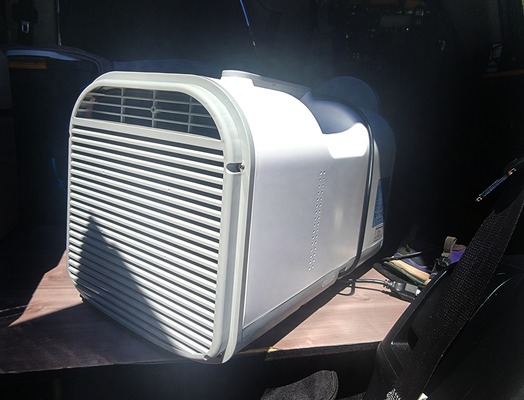
Can a 4,500 BTU portable air conditioner keep up with 109°F heat in a 4Runner?
Car camping in the summer isn’t for the faint of heart, especially when outside temps creep into triple digits. To find out whether a 4,500 BTU portable air conditioner could hold its own in this brutal heat, I set up a real-world stress test inside my 4Runner. This article breaks down what I did, what worked, and whether a portable unit like this is worth it for people living or camping out of their vehicles.
The portable air conditioner:
Waykar model THG45A purchased on Amazon. See it by clicking here
Test Setup
The goal was to stress test under hot temperature conditions but give the portable A/C the best shot at success. Here’s how I prepped:
- Vehicle: Toyota 4Runner
- Air Conditioner Unit: 4,500 BTU portable A/C, rated to cool up to 130 square feet
- Rear cabin area cooled: Approximately 22 square feet
- Power: Goal Zero Yeti 1500X (battery only, no solar or shore power)
- Run time: Just over 2 hours (system estimated 3 hours total runtime)
Cabin prep:
- Thermal blackout curtain divided front cabin from rear
- Reflective insulation on all windows (windshield and moonroof covered from outside)
- Moonroof: Inside half Coroplast / half factory slide; Outside fully covered with reflective insulation
- Vent hose routed through moonroof, **not insulated**


I also tested:
- 1 hour with myself inside
- 1 hour without me inside
- Fan set to **high** the entire time
Environmental Conditions
- Outside air temp: 103–109°F
- Surface temp of 4Runner (sun-exposed metal): 167.8°F
- Full sun, no shade


Results
- Cabin temp (empty): 78.7°F
- Cabin temp (with me inside): 79.8°F (+1°F from body heat)
- Cold air output: 60.9°F
- Sound level: 40 dB (quiet)
While inside, a group of 5 people walked past and had no clue anyone was inside or that an A/C was running. They were visibly shocked and stated so when I stepped out.


Comparison: Vehicle A/C
BTUs: 12,000–15,000
Cold air output after 5 minutes: 44.7°F
This comparison isn’t apples-to-apples, but it’s a reality check for expectations. A vehicle’s built-in A/C is significantly stronger. But the portable A/C held its own when the space was properly prepped.
What Can Improve Performance?
If you’re using a similar setup, here are things you can do to improve your experience:
- Pre-cool your entire cabin before starting your session. This helps the A/C work less and prevents hot gear and materials from radiating heat for hours.
- Keep doors closed. Limit how often you open the vehicle to prevent cool air loss.
- Insulate the vent hose. This would improve airflow efficiency significantly.
- Avoid sharp bends in the hose, especially 90° angles.
- Use shade, if available. My test was full sun on purpose, but shade would help tremendously.
- Add internal fans for circulation.
- Consider use Sleep mode at night to reduce power draw and noise while maintaining comfort.
- Consider using Dry mode in high humidity conditions
- Access to shore power can drastically improve performance. If you’re at a campsite with hookups or have a reliable external power source, you’ll be able to run the unit longer and cool the space more consistently, making it even more effective.
Final Thoughts
This portable A/C isn’t a magic solution, and it won’t replace your vehicle’s factory system. But under the right conditions and with a smart setup, it can absolutely create a comfortable environment in extreme heat, especially for working, napping, or resting in a parked car.
That said, I would not recommend this unit for larger setups or full-vehicle applications. It’s best suited for small, well-insulated spaces like the 22 sq ft cabin I tested.
If you’re cooling an extended size van, or RV without heavy insulation, you’ll likely be disappointed with the results.
It won’t frost your windows, but it may keep you from overheating, especially when every degree counts.
NOTES: Stress test location Phoenix, Arizona. Test performed on May 22, 2025. Test start time 2.30pm. Test end time: 4:47pm
If you buy this air conditioner through my Amazon, I may earn a commission. This supports my mission to help other car campers thrive in this lifestyle.